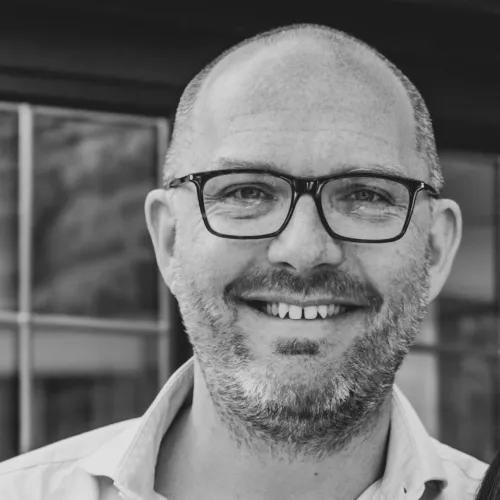
Revd Dr Oliver Wright
I was a lawyer in London for fifteen years, specialising in planning law, before returning to Oxford with my family to study philosophical theology and to train for ordination in the Church of England. This culminated in 2025 with the completion of my doctorate which combined the philosophy of language with modern doctrine. I was appointed a JRF at Pembroke in October 2025.
I teach undergratuate theology papers including Key Themes in Systematic Theology and The Figure of Jesus Through the Centuries.
I have published widely in the field of philosophical theology, including on Kierkegaard, Agamben, Ricoeur, Rowan Williams, St Paul, and Prosper of Aquitaine’s ‘Lex orandi lex credendi’.
Philosophical theology with a special interest in language seems unusually well suited to making an important contribution to the growing conversation and controversy concerning AI and in particular large language models. My research is now moving into that sphere therefore, and I am looking to try and answer the perennial question about the meaning of life using resources such as Aristotle, Aquinas, the Gospel of St John, Hannah Arendt, and Giorgio Agamben.
New evidence for ‘The Biblical Kierkegaard’? Several key annotations in Kierkegaard’s Greek New Testaments and their implications. Literature and Theology. https://doi.org/10.1093/litthe/fraf034
Sestinas, Farce, and Rules of Religious Life: the Performative Theology of Giorgio Agamben. Literature and Theology 39, no.3 (September 2025) 187-202.
“Dispossession”: the movement of hermeneutics and prayer in Paul Ricoeur and Rowan Williams. Literature and Theology 38, no.3 (September 2024) 228-242.
Prosper’s Law: putting the lex back into orandi and credendi. The Oxford Journal for Law and Religion 13, no.2 (June 2024) 151–171.
A Theological Reading of the “Welcome” Offered by God and Christ in Romans 14–15 Using the Septuagint. The Heythrop Journal 65, no.3 (May 2024) 292–305.
The Law of Theology: what has lex to do with credendi and orandi? Irish Theological Quarterly (forthcoming).
Instruments and Intelligence: AI and the meaning of “life” (with Aristotle, Aquinas, Arendt, Agamben, and the Gospel of John) Harvard Journal of Law and Public Policy (forthcoming).
News from Theology & Religion
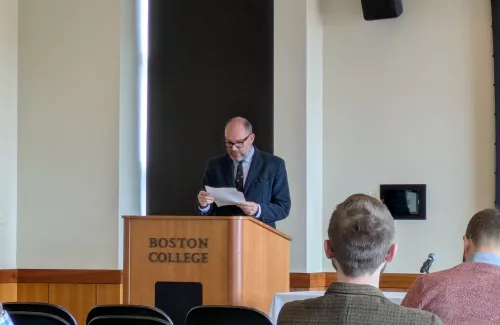
Revd Dr Oliver Wright
I was a lawyer in London for fifteen years, specialising in planning law, before returning to Oxford with my family to study philosophical theology and to train for ordination in the Church of England. This culminated in 2025 with the completion of my doctorate which combined the philosophy of language with modern doctrine. I was appointed a JRF at Pembroke in October 2025.
I teach undergratuate theology papers including Key Themes in Systematic Theology and The Figure of Jesus Through the Centuries.
I have published widely in the field of philosophical theology, including on Kierkegaard, Agamben, Ricoeur, Rowan Williams, St Paul, and Prosper of Aquitaine’s ‘Lex orandi lex credendi’.
Philosophical theology with a special interest in language seems unusually well suited to making an important contribution to the growing conversation and controversy concerning AI and in particular large language models. My research is now moving into that sphere therefore, and I am looking to try and answer the perennial question about the meaning of life using resources such as Aristotle, Aquinas, the Gospel of St John, Hannah Arendt, and Giorgio Agamben.
New evidence for ‘The Biblical Kierkegaard’? Several key annotations in Kierkegaard’s Greek New Testaments and their implications. Literature and Theology. https://doi.org/10.1093/litthe/fraf034
Sestinas, Farce, and Rules of Religious Life: the Performative Theology of Giorgio Agamben. Literature and Theology 39, no.3 (September 2025) 187-202.
“Dispossession”: the movement of hermeneutics and prayer in Paul Ricoeur and Rowan Williams. Literature and Theology 38, no.3 (September 2024) 228-242.
Prosper’s Law: putting the lex back into orandi and credendi. The Oxford Journal for Law and Religion 13, no.2 (June 2024) 151–171.
A Theological Reading of the “Welcome” Offered by God and Christ in Romans 14–15 Using the Septuagint. The Heythrop Journal 65, no.3 (May 2024) 292–305.
The Law of Theology: what has lex to do with credendi and orandi? Irish Theological Quarterly (forthcoming).
Instruments and Intelligence: AI and the meaning of “life” (with Aristotle, Aquinas, Arendt, Agamben, and the Gospel of John) Harvard Journal of Law and Public Policy (forthcoming).