
More Pembroke news

Zbigniew Andrzej Pełczyński: A Life of Leadership in Action
NEWS |
Piotr Szulc (2023) is a third-year postgraudate at Pembroke studying for his EMBA with the Said Business School. Drawing on his own research and conversations with alumnus and biographer David McAvoy (1959), Piotr reflects on the life and legacy of renowned Pembroke philosopher Zbigniew Pełczyński.
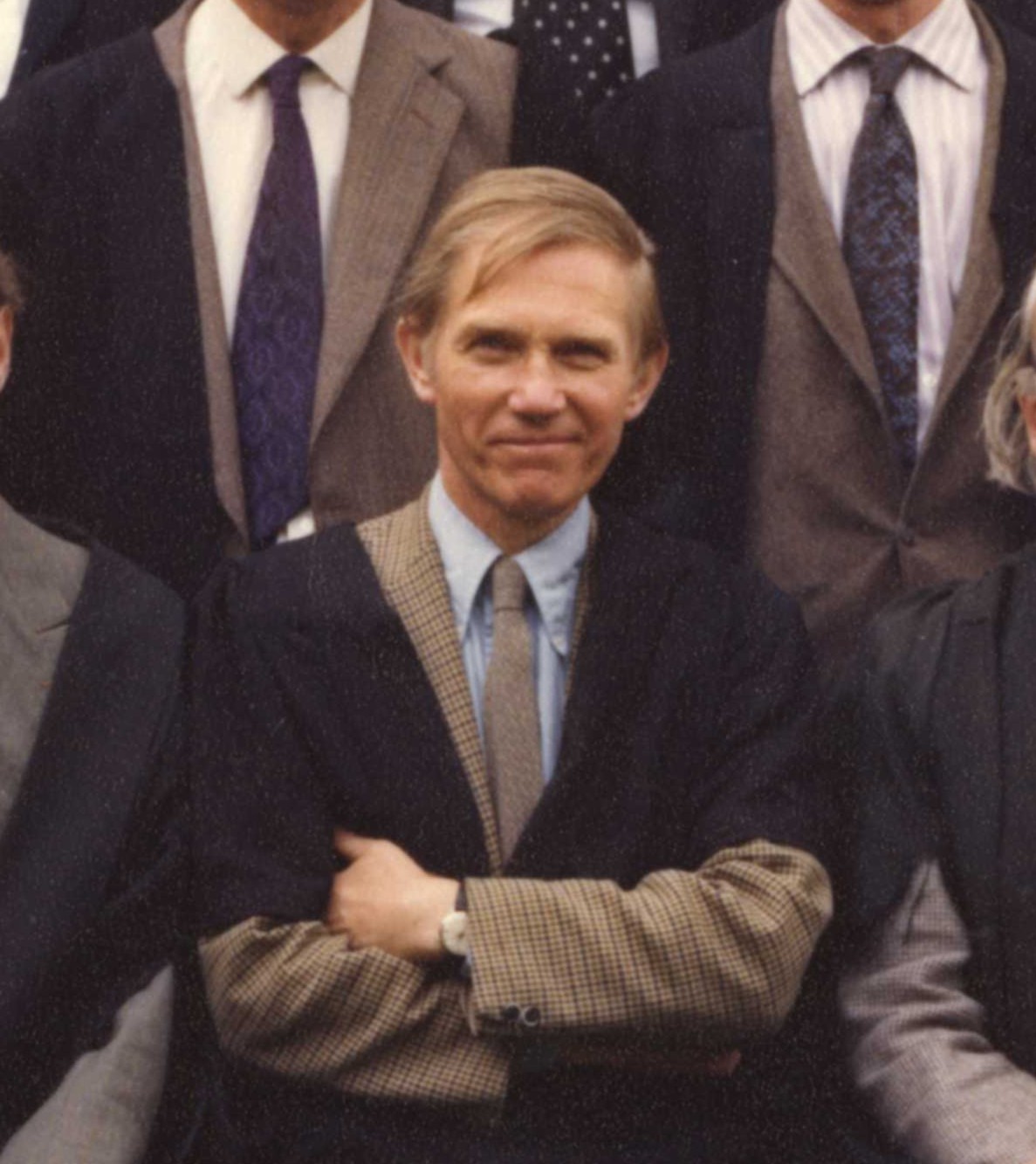
Pełczyński at Pembroke, 1982
I first encountered the legacy of Zbigniew Andrzej Pełczyński through the School for Leaders, which he founded in 1994 – an experience that profoundly shaped my own outlook on responsibility, debate, and public life. Reading David McAvoy’s Zbigniew Pelczynski: A Life Remembered only deepened my appreciation of his work. What struck me most was not only the scale of his achievements, but the clarity of his conviction: that leadership is not a title, but a moral practice. For many who have passed through initiatives he inspired, Pełczyński – known widely as ZAP – remains a quiet but enduring influence.
Zbigniew Andrzej Pełczyński left a lasting mark on philosophy, leadership, and education, and on generations of students fortunate enough to learn from him. Born on 29 December 1925 in Grodzisk Mazowiecki, Poland, his life journey took him from the upheavals of wartime Europe to the heart of Oxford’s intellectual community, where he became not only a respected scholar but also a mentor, institution-builder, and inspiring presence.
"He invested time, care, and energy in his students, encouraging not only intellectual rigour but also independence, courage, and a sense of responsibility."
Pełczyński’s early path to higher education was shaped by the war. He fought in the Warsaw Uprising of 1944 and subsequently became a prisoner of war in Germany. After liberation in April 1945, he arrived in the United Kingdom in early 1946 as a corporal in the Polish Army, holding a scholarship to study at the Faculty of Polish Law. Established by the Polish government-in-exile to educate future leaders for a rebuilt Poland, the Faculty was housed in a single staircase of Oriel College, Oxford. It soon became evident, however, that an education in Polish law would have limited relevance while Poland remained under Soviet control. With no places immediately available at Oxford, Pełczyński moved to the University of St Andrews to study Economics and Political Science. He later returned to Oxford where he completed his DPhil, focusing in particular on Hegel’s political writings, a field that would remain central to his intellectual work throughout his life. In 1952 he became a British citizen, reflecting his deep connection to the UK, though he never lost sight of his Polish roots.
From 1957 Pełczyński was a lecturer at Pembroke College until, in 1961, he was elected to a fellowship. He was to remain a Fellow of Pembroke until his retirement in 1993. Teaching, for him, was never a purely academic exercise. He invested time, care, and energy in his students, encouraging not only intellectual rigour but also independence, courage, and a sense of responsibility. Among those he taught were figures such as Bill Clinton and Radosław Sikorski, yet his influence extended far beyond well-known names – shaping the confidence and direction of countless others.
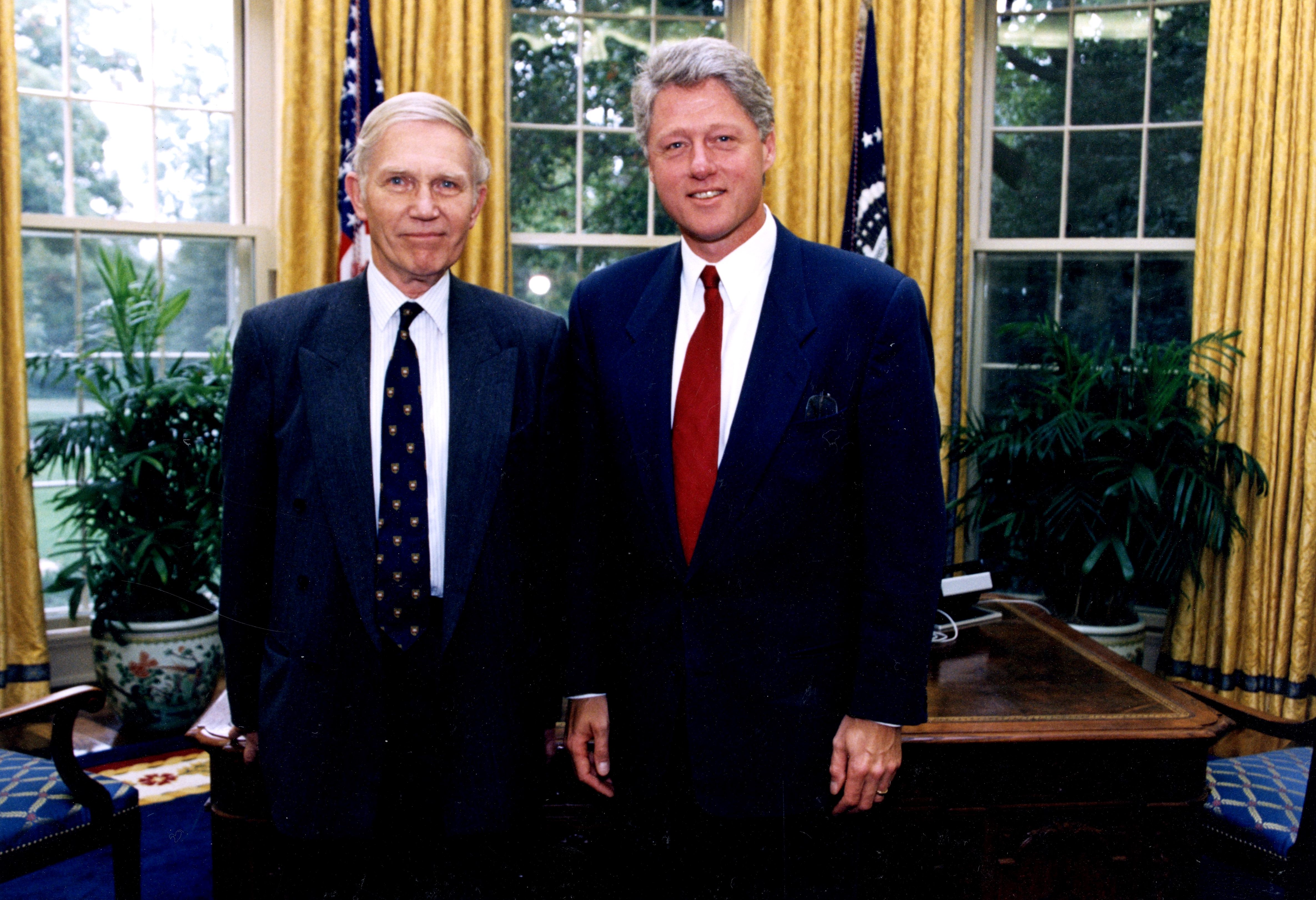
Pełczyński with President Bill Clinton, 1992 - Official White House Photograph
His commitment to philosophy found institutional expression in his role in founding the Hegel Society of Great Britain. Through this he helped to cultivate a deeper and more engaged understanding of Hegel’s ideas. Yet Pełczyński never saw philosophy as an abstract pursuit alone. He believed in initiative, action, and moral responsibility, often expressing impatience with passivity and complacency.
"In a time when public discourse often feels polarised and impatient, his insistence on character, dialogue, and moral responsibility seems not dated but urgently contemporary."
This belief in active leadership culminated in what he regarded as his most important achievement: the founding of the School for Leaders in 1994. The School sought to develop thoughtful, principled leaders for public life: people prepared not only to hold power, but to use it wisely. It brought together individuals with diverse and sometimes opposing views, reflecting Pełczyński’s conviction that meaningful leadership requires openness, debate, and intellectual humility. Learning how to argue well – and listen seriously – was central to its ethos.
Beyond his formal achievements, Pełczyński played a significant role in fostering Polish cultural and academic life in Oxford. As a founding patron of the Oxford University Polish Society, he helped create a sense of continuity for Polish students far from home. He was also known for the breadth of his friendships and interests — from political thought to literature — including his association with J.R.R. Tolkien, with whom he enjoyed walks around Christ Church Meadow and the Botanical Gardens. These exchanges, more conversational than ceremonial, reflected his belief that intellectual discussion need not be confined to lecture halls.
His legacy lives on not only through institutions such as the School for Leaders and the Hegel Society, but through the many individuals whose lives he shaped. Conversations with those who studied under him or later wrote about him reveal a consistent theme: Pełczyński demanded seriousness of thought, but paired it with encouragement and a personal belief in others’ potential. For many participants in projects he initiated, memories of him remain vivid. I count myself among them. Taking part in a School for Leaders programme left a lasting imprint on how I think about civic duty and dialogue.
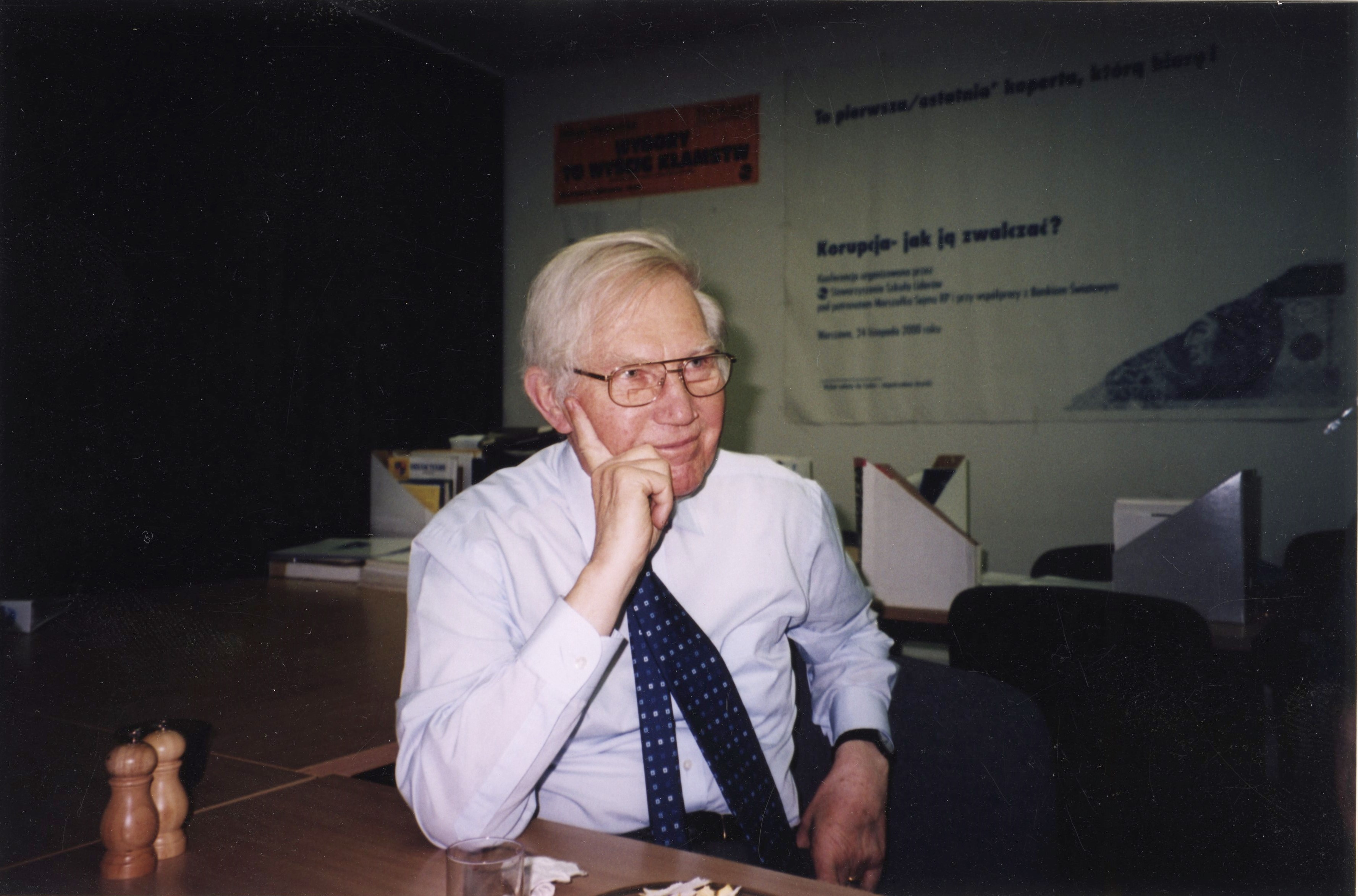
Two remarks remembered by countless graduates capture his spirit well. The first is widely quoted: “Don’t wait passively for something to happen. Treat your life as a challenge.”
The second speaks to his belief in resilience and second chances: “Be patient — we sometimes do get a second chance.”
In this way, Pełczyński’s influence was not merely institutional or intellectual, but profoundly human. He encouraged initiative, valued dialogue, and insisted that leadership begins with character. In a time when public discourse often feels polarised and impatient, his insistence on character, dialogue, and moral responsibility seems not dated but urgently contemporary. His life stands as a reminder that the most enduring forms of leadership are often quiet, persistent, and grounded in the belief that individuals, given encouragement and responsibility, can rise to challenges they once thought beyond them.
The author would like to thank David McAvoy for his generous support and insightful conversations while preparing this article.