More Pembroke news
Medical Students Reflect on ‘What Makes a Good Doctor’
NEWS |
What makes a good doctor? This is one of two questions our medical students were invited to answer for a chance to win the 2026 Ayers-Evans Prize.
Established to commemorate Miss K.A. Ayres, the Ayers-Evans Prize is open to Pembroke undergraduates reading Medicine or Physiological Sciences. Students submit their essays under a pseudonym in response to a choice of topics agreed on by our Medicine tutors. This year’s winners were Daria Bageac (2025, Medicine) and Leon Kielmann (2023, Medicine) and our judging panel was made up of Professor Frederik Karpe and Dr Richard Harrington.
The deceptively simple question, ‘What makes a good doctor?’, makes the supposition that we all want or expect our doctors to be good. From Dr. Tertius Lydgate in George Eliot’s Middlemarch to the heroes of medical dramas like the classics House and Grey’s Anatomy or the more recent The Good Doctor, the figure of the doctor has captured the public imagination time and time again. But how do our own doctors-in-training define a ‘good’ doctor, the kind of doctor they might go on to become?
‘I think everyone has their own idea of what makes a good doctor,’ shared Leon. ‘The difficulty comes in appreciating the subjectivity of the matter while still trying to write a coherent essay that answers the question!’
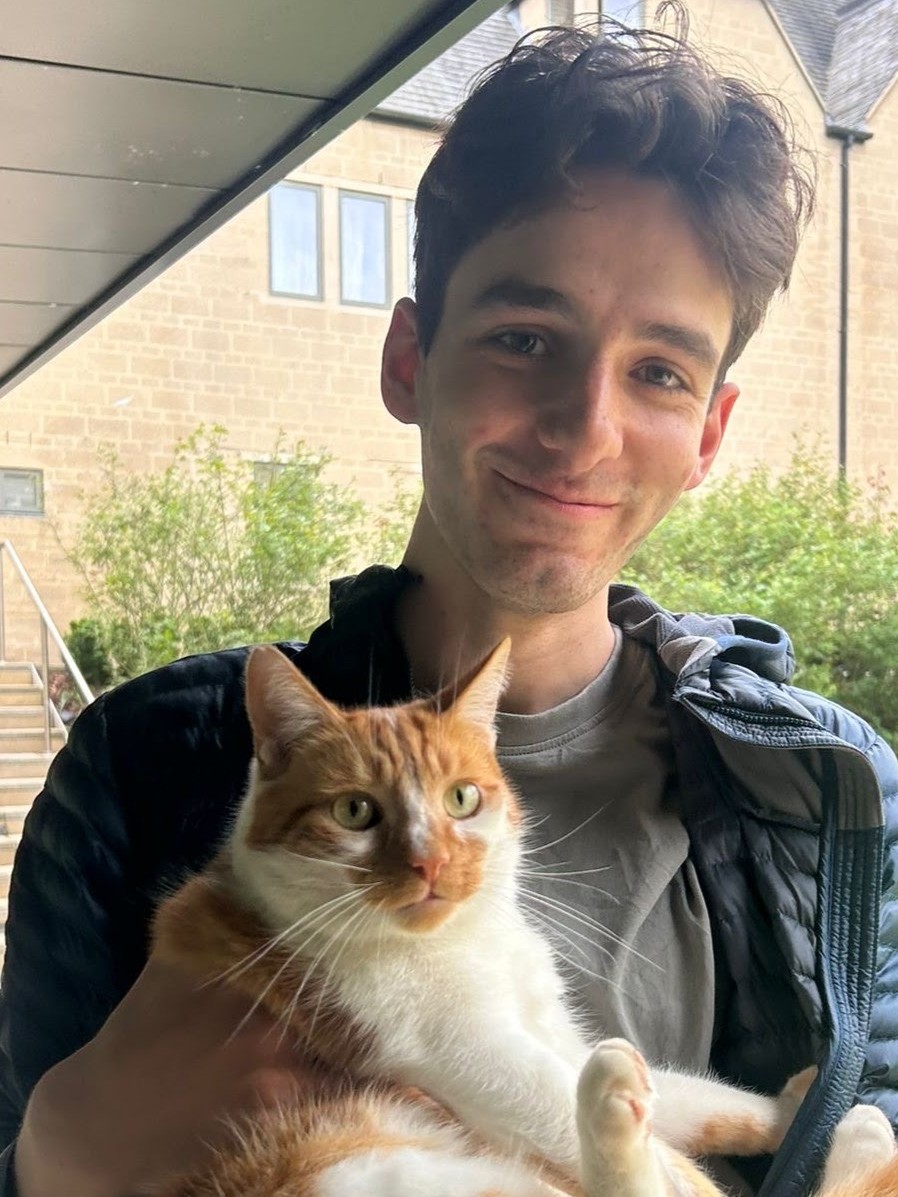
For Leon, writing under the pseudonym Hopefully A. Gooddoctor, the ‘one universal quality of a good doctor’ is ‘someone a patient can trust.’ Leon pointed to three recurring characteristics that have made for successful doctors across various historical and geographical contexts. ‘A trustworthy doctor is someone who appreciates the moral dimension of their actions, balances external evidence with individual judgement in decision-making and prioritises the overall welfare of the patient as the axiomatic focus of their practice,’ argues Leon. ‘The good doctor is not simply the most technically accomplished healer, nor the most morally virtuous person in abstract terms, but the one whose character, judgement and attention to the patient together make trust possible.’
Daria, on the other hand, argues that the nature of a ‘good’ doctor has shifted over time. ‘The history of medicine reveals a succession of figures,’ she writes, ‘the virtuous healer, the respectable gentleman, the scientific expert, the accountable professional and increasingly, the human practitioner navigating a technological age.’ Despite the changing expectations for doctors throughout history, ‘society has always entrusted doctors with specialised knowledge and expected them to use it wisely in service of others.’
Many congratulations to both Daria and Leon on their winning essay submissions.