More Pembroke news
Alumni Interviews: Simone Desmarchelier
NEWS |
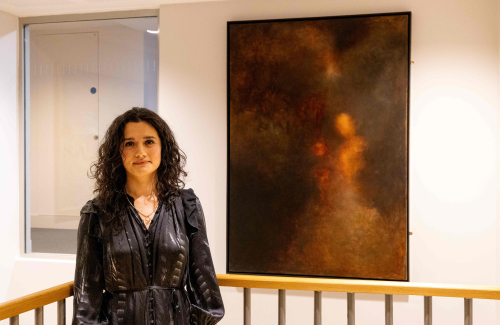
Simone Desmarchelier graduated with a First Class Bachelor of Civil Law (BCL) from Pembroke in 1996. She recently made a trip to Europe from Australia which included visiting Pembroke to donate one of her artworks to the SCR. Katie Schütte from the Development Office had a chance to chat with her about her time at Pembroke and life since she graduated.
Has Pembroke changed since you studied here?
In some ways yes - I used to live on Brewer Street, and I see the window is still there, but not the doorway and I’m sure the interior has changed! Much of College is the same, like the Dining Hall and the beautiful quads, but of course there is the new bridge connecting over to Rokos Quad and the new student accommodation. The Porters’ Lodge has also transformed – in my day there were pigeon holes lining the entrance and that’s where your mail and notes from other students were delivered. I remember the Head Porter Mr Harvey who, at first, was quite stern and intimidating, but ended up being one of the people I was closest to by the end of my studies at Pembroke.
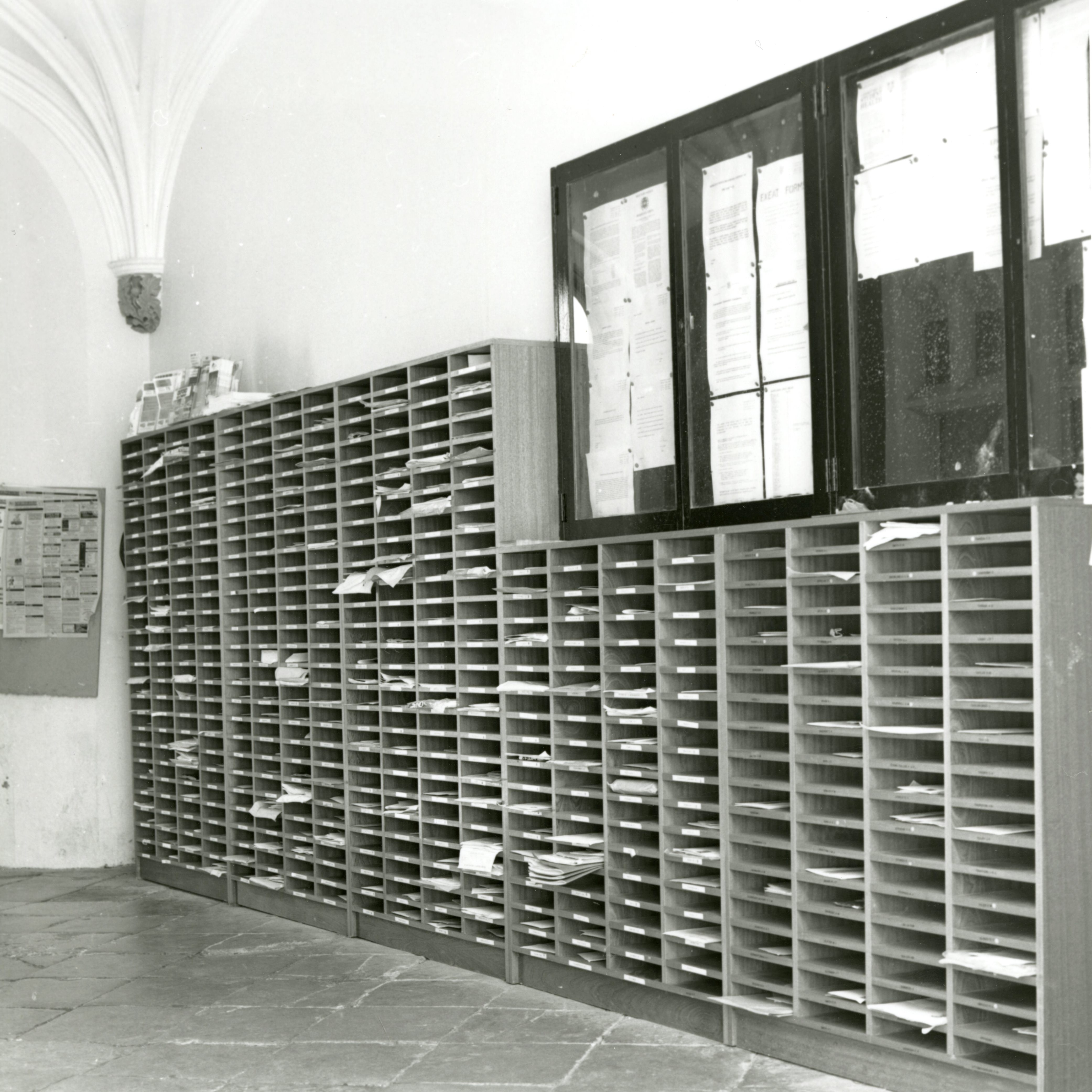
The Porters' Lodge in the 90s.
What did you like about Pembroke?
The warmth of the community. The small size of Pembroke encouraged JCR and MCR collegiality, and some of the friends I’ve kept from my Pembroke days were undergraduates at a time when I was a graduate. The size of the college and design of social events enabled the JCR and MCR to mix often and I saw this as one of Pembroke’s distinct advantages at the time.
How did you choose Pembroke College?
When I applied in the early 90s, each college had a physical brochure and, in distant Australia, one relied on word of mouth. I saw that Pembroke had an Australian law scholarship, and whilst this was no longer available by the time I joined (the mid-90s was a financially difficult period), I accepted my offer from the University and College.
Geographically and culturally, it was a huge change when I arrived. My understanding of Oxford was principally derived from literature and cinema, and I believed it would be like Brideshead Revisited! I imagined as students we would be sitting in coffee shops having deep philosophical debates and punting on weekends. Needless to say, the reality was quite different.
What did you do after graduating from Pembroke?
I returned to Sydney where I specialised in corporate law, working in multinational law firms. One of my clients was an international investment bank, and they invited me to move to London. During my BCL I studied private international law and European business regulation, but working in Australia didn’t enable me to use that knowledge and those skills. I have always loved languages – I am bilingual in English and Italian, and fluent in French and Spanish – and I didn’t want to get to an age where I hadn’t lived and worked in Europe, so I took the opportunity and moved to London. There I worked for four years in investment banking, covering investor relations in real estate and infrastructure across Europe.
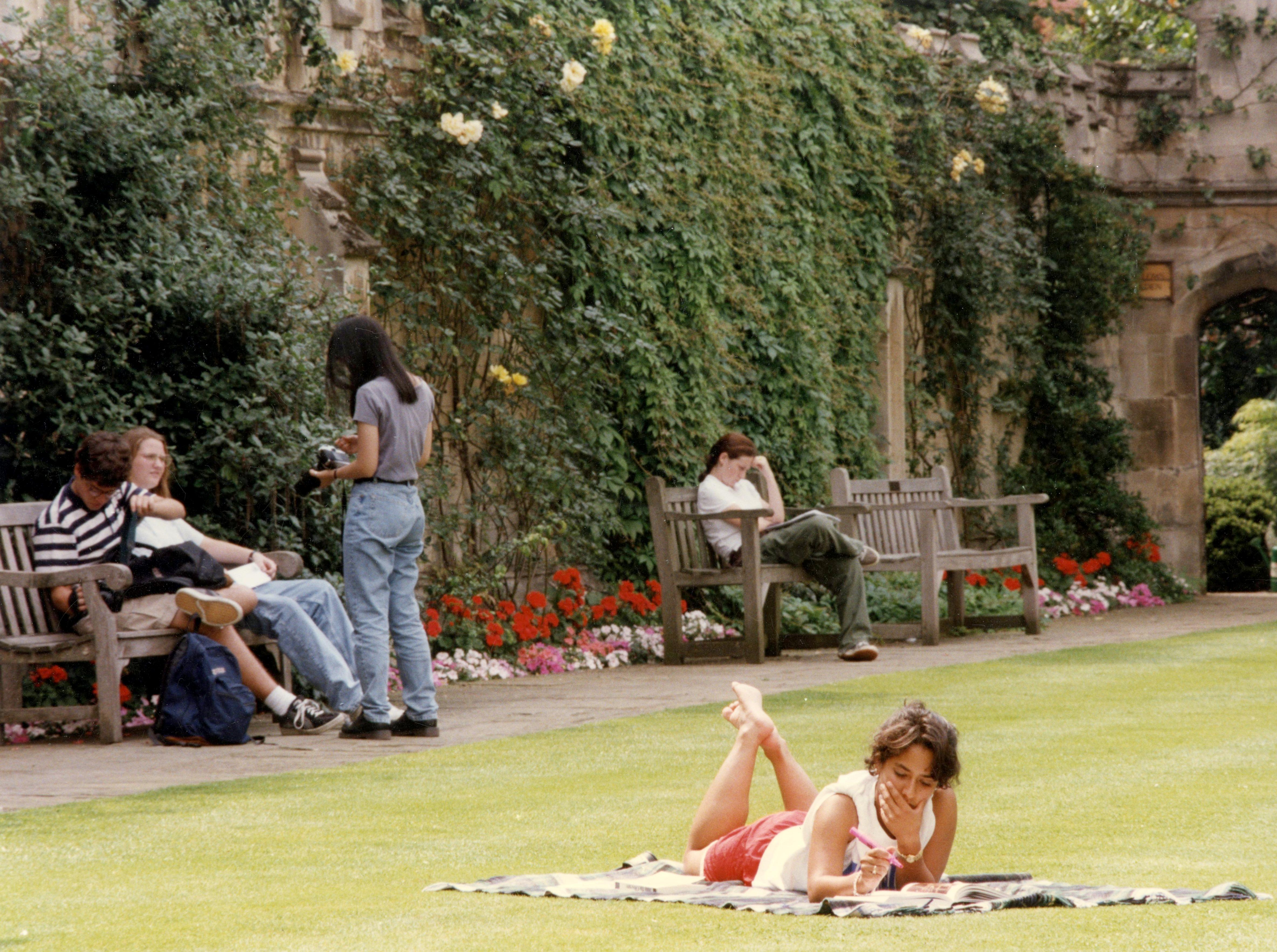
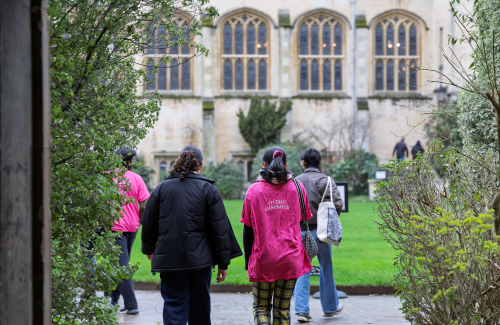
Students in Chapel Quad in the 90s.
Wow, that’s quite a career change!
Indeed - and after London I moved to Milan to begin my third career as a diplomat for the Australian government as Consul General to Italy.
Was it challenging to make that career change, or did you find yourself using similar skills?
The greatest challenge was moving from the private to the public sector, as I found they have different styles of working. In my role as Consul General and senior trade and Investment Commissioner I used many of the same skills I had honed in law and investment banking, as the goal was often to bring diverse people together for a common purpose. In investment banking, this was to raise money for infrastructure and real estate funds in Europe, and as a Senior Trade and Investment Commissioner, this was to increase investment from Europe to Australia.
As a diplomat, my legal training was incredibly useful. Many of the tricky issues I had to resolve had a legal and ethical undertone. The strict legal training I received at Oxford meant that I could make the right decision in difficult scenarios. It was a great job as I am passionate about working with people and I was able to utilise my negotiation and linguistic skills.
That’s incredibly interesting. I’m wondering how you then ended up back in Australia?
I moved back to Australia in 2015 for family reasons. My son was young at the time, and I wanted him to be educated at school-level in Australia. The move back to Australia led me into a career as Non-Executive Director and Chair in the real estate, infrastructure and funds management space.
And you’re also an artist, so perhaps a fifth career on the horizon!
Never say never! But in all honesty, there is nothing linear about my career path. If you had told my graduate self, ‘You’ll be working in the corporate world and painting’, I would not have believed you. There was an expectation when I was at university that your career should be linear, but I have found that if you move with passion and purpose, you can always try something new. I broke out of law into investment banking, which is not uncommon, but then I went on to have two further careers in diplomacy and the financial services industry. In every job you build skills, and you can be malleable in how you use them in other professions.
You’ve had such a varied and successful career. What do you think has been your greatest achievement so far?
I think my most satisfying achievement (other than raising my son) was my year at Oxford. It was the greatest intellectual challenge of my life, and what I am proudest of achieving. To be surrounded by such brilliant minds, by so many nationalities and to be taught by the people who wrote the seminal legal texts I was studying was incredible.
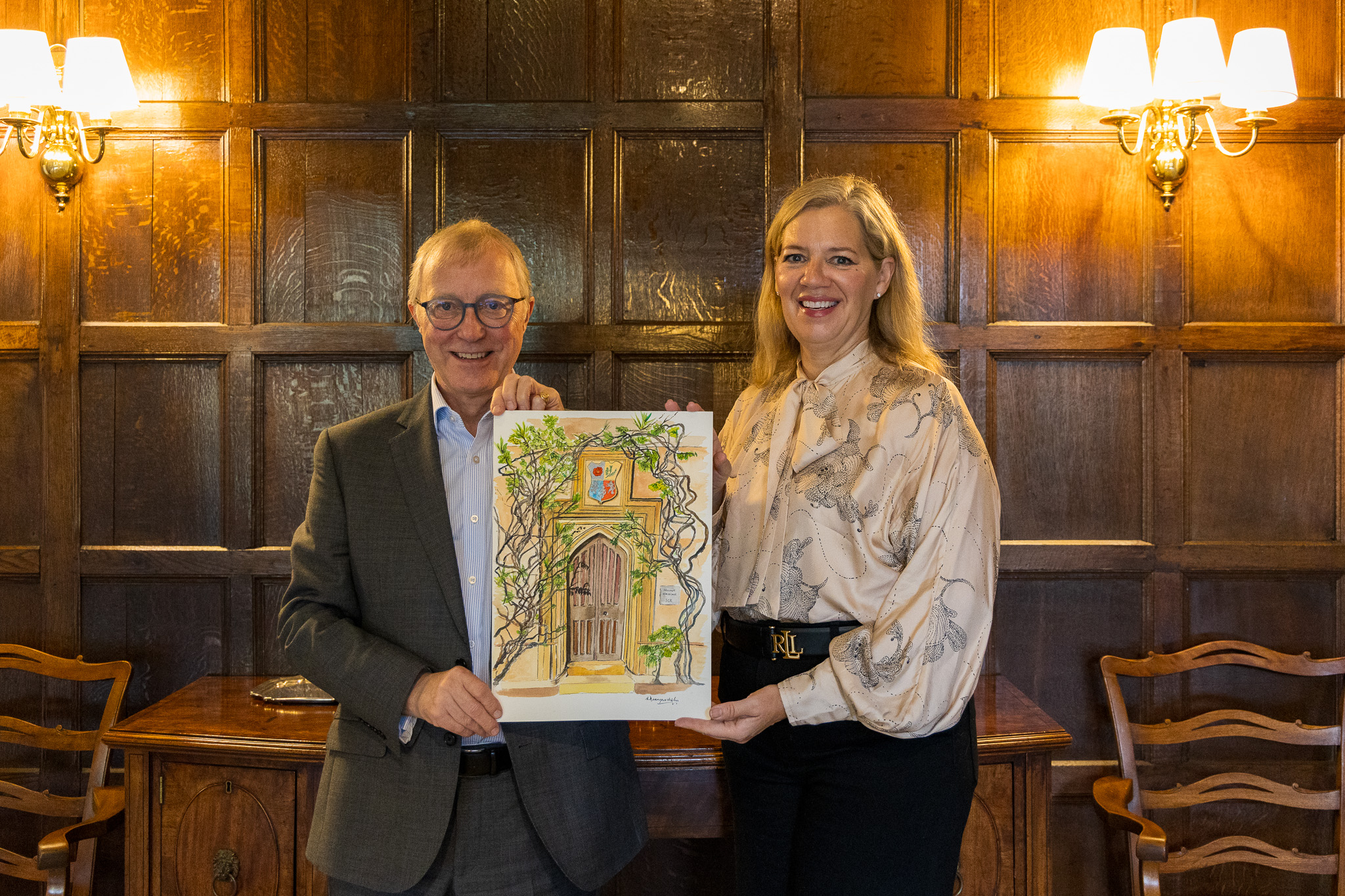
Thank you to Simone for taking the time to speak with us and for her beautiful watercolour painting of the SCR staircase.